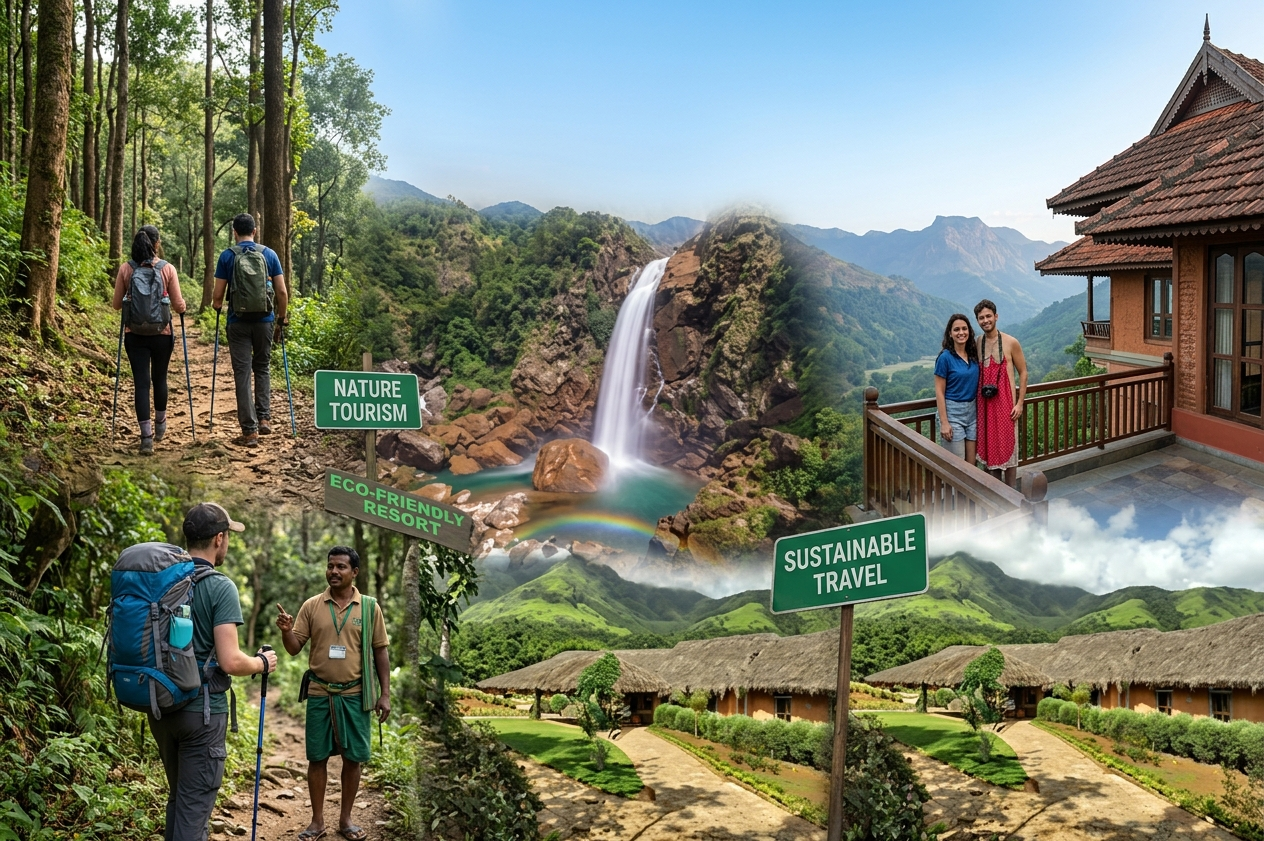
Something significant is happening in Indian travel. For decades, the aspirational holiday was international — Dubai, Singapore, Europe. Or domestic landmarks — the Taj Mahal, Rajasthan’s palaces, Goa’s beaches. But a new and powerful travel preference is emerging across Indian demographics, particularly among urban millennials and Gen Z: the desire for nature. For green. For clean air and silence and the kind of beauty that only the natural world provides. Here is why this trend is happening and what it means.
The Data: Nature Tourism Is Growing Fast
Travel industry data consistently shows that searches for nature-based travel experiences — forest stays, wildlife resorts, mountain retreats, plantation getaways — have grown dramatically in India since 2020. The COVID-19 pandemic accelerated a shift that was already underway, as lockdowns made millions of urban Indians acutely aware of what they had been missing: space, greenery, fresh air, and quiet.
Post-pandemic travel surveys show that ‘spending time in nature’ has become one of the top-cited motivations for domestic travel in India — outranking shopping, food tourism, and cultural sightseeing in several demographic groups. Young professionals, young families, and urban couples consistently cite natural destinations as their preferred travel option.
Why Urban Indians Are Drawn to Nature Travel
The drivers of this trend are rooted in the conditions of modern urban Indian life:
The City Fatigue Factor
India’s major cities — Bengaluru, Mumbai, Delhi, Hyderabad, Pune — are among the most demanding urban environments in the world. Traffic congestion that can turn a 10 km commute into a 90-minute ordeal. Air quality that regularly exceeds dangerous levels. Population density that makes the simple act of being alone in public nearly impossible. Noise levels that make sleep difficult and restoration impossible.
After weeks and months of this, the desire for nature is not just a lifestyle preference. It is a genuine physical and psychological need. The body wants clean air. The nervous system wants quiet. The mind wants horizon and space and the kind of undemanding beauty that only the natural world provides.
The Wellness Connection
Nature travel has been powerfully influenced by India’s growing wellness culture. As more Indians become aware of mental health, stress management, and the physiological benefits of time in natural environments, the connection between nature and wellbeing is becoming common knowledge.
Research consistently shows that time in natural environments reduces cortisol, lowers blood pressure, improves sleep quality, boosts creativity, and increases feelings of happiness and wellbeing. These are not marginal effects — they are significant and measurable. For a generation of urban Indians who are increasingly health-conscious, these benefits are a compelling reason to choose nature over the city for their holidays.
Social Media and the Visual Appeal of Nature
The visual language of social media has played a significant role in driving nature travel interest. Images of misty Western Ghats valleys, coffee plantation infinity pools, bonfire evenings under star-filled skies — these images perform extraordinarily well on Instagram and YouTube, generating the aspirational response that drives travel decisions.
The visual beauty of Indian natural destinations has always been extraordinary but was previously underrepresented in travel content. The democratisation of photography through smartphones has changed this — beautiful natural destinations are now documented and shared by millions of ordinary travellers, creating a constantly growing body of compelling content that inspires others to visit.
The Rise of the Long Weekend Trip
India’s growing number of public holidays — combined with increasing corporate flexibility around remote work — has created a new travel format: the long weekend trip. Two to four days, close to home, maximum nature immersion. This format perfectly suits nature destinations within 200 to 300 km of major cities.
For Bengaluru’s enormous urban population, this means destinations like Sakleshpur, Coorg, and Chikmagalur have become the default long weekend destinations for a huge and growing demographic. The nature experience that was once reserved for annual holidays is now accessible monthly or even bi-monthly.
What Travellers Want from Nature Destinations
As nature travel grows, the expectations of nature travellers are also becoming clearer. They are not looking for roughing it. They are not looking for basic forest campsites with minimal facilities. They want:
- Immersive natural setting: Really in nature, not just near it
- Comfortable, well-designed accommodation: Private villas rather than tents or dormitories
- Quality, locally authentic food: The growing food awareness of Indian urban culture extends to travel
- Privacy: The ability to experience nature without crowds
- Meaningful experiences: Plantation walks, wildlife encounters, local culture — not just a pool and a view
- Sustainability consciousness: Resorts that protect and respect the natural environment they are set within
How Rivi Resorts Meets the Nature Travel Moment
Rivi Resorts in Sakleshpur is precisely aligned with what India’s growing nature travel market wants. A working coffee estate in the Western Ghats — one of the world’s most important biodiversity hotspots. Private villas that place guests within the plantation environment. Authentic Malnad cuisine from local ingredients. A temperature-controlled infinity pool with valley views. Genuinely pet-friendly. Within 5 hours of Bengaluru for long weekend access.
As nature-based travel continues to grow in India, destinations and resorts that offer the genuine, immersive, high-quality experience that informed travellers are seeking will lead the market. Rivi Resorts is already there.
Join India’s nature travel movement at Rivi Resorts, Sakleshpur — call +91-9036111000 or visit riviresorts.com