Here is a question for you: where does your morning coffee come from?
Not the café. Not the brand. The actual plant. What does it look like? What is the soil like? Who tends it? How does a small green seed on a bush in a hill station in Karnataka end up as the thing that wakes you up every morning?
Most of us have absolutely no idea. And that is exactly why a coffee plantation walk in Sakleshpur is one of the most unexpectedly wonderful experiences you can have on a trip here.
It is not just a walk. It is a story — of a plant, a region, a farming tradition, and the extraordinary process that transforms a fruit into one of the world’s most beloved drinks. And it is told in the place where it actually happens, which makes all the difference.
What Is a Coffee Plantation Walk?
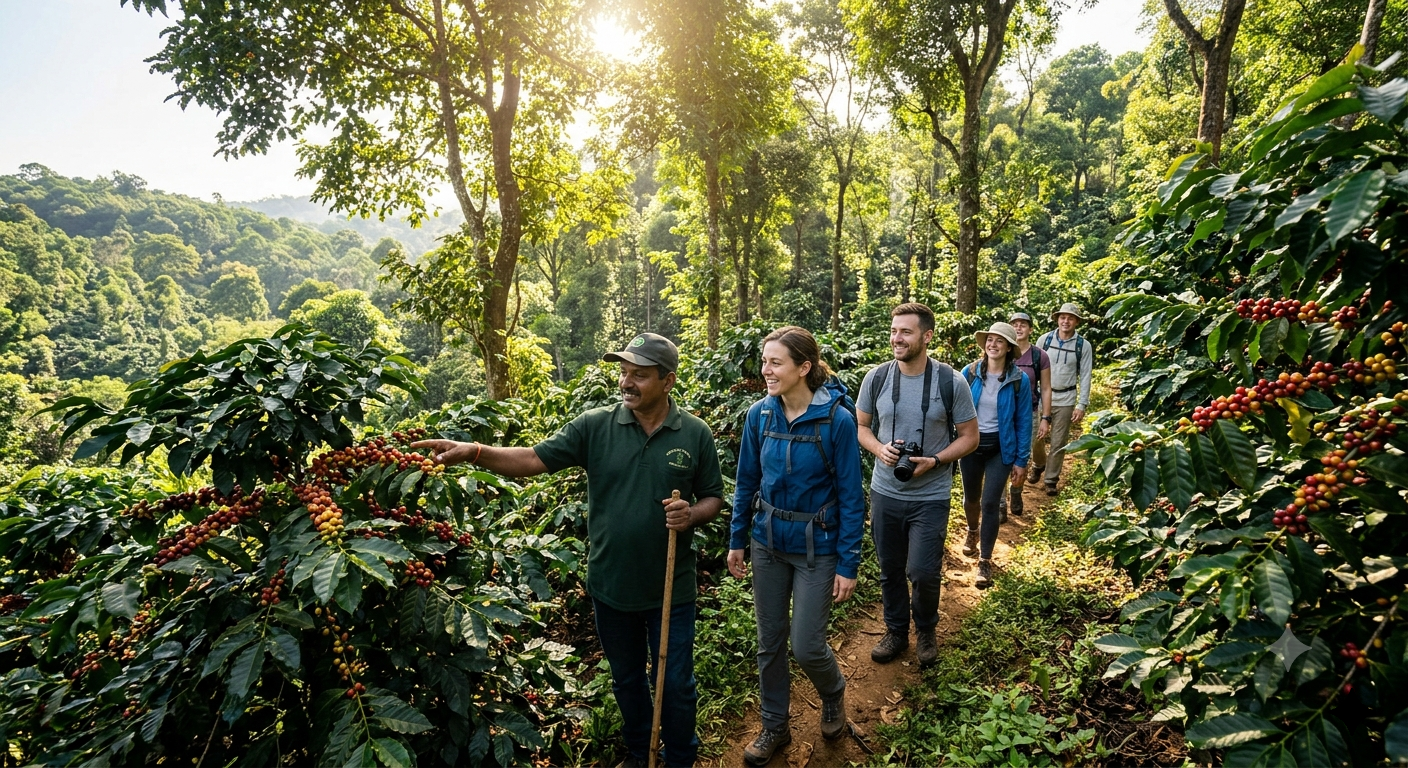
A coffee plantation walk is a guided tour through a working coffee estate — a place where coffee is actually grown, tended, and harvested. A knowledgeable guide takes you through the rows of plants, explains the whole story of coffee farming, shows you different varieties and stages of growth, and answers every question you could possibly have.
In Sakleshpur, the coffee estates are real and working — not tourist set-ups. The plants are genuinely tended by farmers. The berries you see are genuinely going to be harvested, processed, and sold. You are not in a recreation of a coffee estate. You are in the actual thing.
At Rivi Resorts, the plantation walk takes you through the resort’s own coffee estate — the same land your villa is built on. This means you do not have to go anywhere. You step outside your front door and you are already in the plantation.
Why It Is More Interesting Than You Expect
Let us be honest about something: a lot of people book a coffee plantation walk because it sounds like something you are “supposed to do” in Sakleshpur, and then they discover that they actually love it.
Here is why it is better than most people anticipate:
You learn something genuinely surprising
Most people — even coffee enthusiasts who have tried many different origins — are surprised by how much they do not know about the plant itself. Did you know that coffee berries look like little red or yellow cherries? That there are two seeds (beans) inside each berry? That coffee plants need the shade of taller trees to grow properly, which is why coffee estates are also home to silver oaks and other native trees?
Did you know that a single coffee plant takes three to four years to start producing fruit, and that each plant only produces about 500 grams of coffee beans per year? That it takes approximately 2,000 hand-picked berries to make just one pound of coffee?
These facts hit differently when you are standing in front of the actual plant, holding an actual berry.
The smell is extraordinary
A coffee estate smells unlike anywhere else you have ever been. During the berry season (November to January), the ripe red berries have a faint, fruity sweetness. During the flowering season (March to April), the entire estate fills with the scent of the white coffee blossoms — a clean, jasmine-like fragrance so intense that it can be smelled from several hundred metres away. Even outside these seasons, the estate has a warm, green, earthy smell from the soil and the leaves.
Breathing this air while walking through the plants is genuinely good for you — not as a wellness marketing claim, but as a simple fact. Fresh air, mild exercise, beautiful surroundings, interesting information. It is exactly the kind of thing that city living never gives you.
It connects the dots in your brain
There is something deeply satisfying about understanding a complete process — from raw material to finished product — especially for something you use every single day. After a coffee plantation walk, every morning cup of coffee will be different for you. You will think of the red berries, the drying beds, the sorting, the roasting. Your daily coffee will mean something more.
This might sound small. It is not. The ability to see where things come from — to understand the full story behind an everyday object — is one of the quiet gifts of travel.
What Happens During a Coffee Plantation Walk at Rivi Resorts
Here is what a typical guided plantation walk at Rivi Resorts looks like:
Start: You meet your guide at the estate — usually in the early morning, when the light is best and the birds are active. The guide is a local who knows the estate, its history, its varieties, and its seasonal rhythms.
The variety introduction: You are shown the different coffee varieties growing in the estate — typically Arabica and sometimes Robusta. You learn the differences: Arabica is the more delicate, more flavourful variety that grows at higher altitudes (Sakleshpur’s altitude is perfect for Arabica). Robusta is hardier and more bitter, used mostly in commercial blends.
The full plant lifecycle: Depending on when you visit, you will see different stages of the coffee plant’s year. In summer (March to April), the white blossoms. In the wet monsoon months, the small green berries forming. In October to November, the berries turning from green to yellow to red. In November to January (peak harvest), the deep red berries ready for picking.
The shading trees: Coffee plants need shade — direct sunlight damages the berries. Sakleshpur estates use native shade trees like silver oak, jackfruit, pepper vines, and other species. The guide explains the relationship between the coffee plants and these trees, and you begin to understand that a coffee estate is actually a carefully managed ecosystem, not just a monoculture crop.
The pepper vines: Many Sakleshpur coffee estates also grow black pepper — the vines wrap around the shading trees and produce clusters of peppercorns alongside the coffee. You will probably find this detail more interesting than you expect.
The coffee berry up close: The guide will show you a ripe coffee berry, open it, and show you the two green coffee beans inside. This moment — holding the raw material of your morning coffee and understanding exactly what it is — is a genuine “oh!” moment for most visitors.
The processing story: The guide explains what happens after picking — the wet or dry processing methods that separate the bean from the fruit, the drying beds, the hulling, the sorting, and eventually the roasting. This is the part that most people had no idea about, and it changes how you think about the differences between different coffees.
The cup: At the end of the walk, you return to the resort for a cup of filter coffee made from the estate’s own Arabica beans. This cup — drunk with full knowledge of everything that went into it — is the best coffee you will have had in a very long time.
Duration: The walk usually takes between 45 minutes and 1.5 hours depending on how many questions you ask (and you will ask many).
Coffee Plantation Walks Through the Seasons
The walk is available and enjoyable year-round, but each season offers something unique:
Summer (March to May): The coffee blossom season. White flowers cover the entire plantation in March and April. The smell is extraordinary. This is considered one of the most beautiful times to visit the estate — the estate looks like it has been dusted with snow.
Monsoon (June to September): The growth season. Small green berries are forming on the plants. The estate is intensely green after months of rain. The walk is fresh, wet, and earthy. Perfect for people who love the smell of rain on leaves.
October to November: The colour change season. Berries are turning from green to yellow to orange to red. The estate is a patchwork of colours. Very photogenic.
November to January: The harvest season. The most exciting time for a plantation walk. Red berries hang heavy on the plants. If you are lucky, you may see pickers at work, moving methodically through the rows. You can pick a berry yourself and understand immediately what makes it ripe.
What Children Learn on a Coffee Plantation Walk
For families visiting with children, the plantation walk is an exceptional educational experience that does not feel like school.
Children learn:
- That coffee is a fruit (most children have no idea)
- How plants grow from seeds and take years to produce fruit
- Why farmers need shade trees, rain, and healthy soil
- The concept of harvest seasons and agricultural cycles
- Where their parents’ morning coffee actually comes from
Many children who do this walk become briefly obsessed with coffee plants after the visit. They look at their parents’ morning coffee differently. Some ask whether they can grow one at home (you can, actually, as a houseplant — though it will take years to produce beans).
Tips for Your Plantation Walk
Go in the early morning. 6:30 AM to 8:00 AM is the best time. The light is soft, the air is cool, the birds are active, and the estate is at its most peaceful. Avoid midday walks in summer.
Wear closed shoes. The estate paths can be slightly uneven and muddy after rain. Sandals or flip-flops are not ideal.
Ask questions. The guides at Rivi Resorts know the estate deeply. There are no dumb questions. Ask everything.
Bring a camera. The estate photography opportunities are excellent — especially in bloom season (white flowers everywhere) and harvest season (bright red berries on green plants).
Go slowly. This is not an aerobic activity. Walk slowly, look at things, stop when something interests you. The goal is not to cover distance.
After the Walk: The Coffee You Earned
After the plantation walk, settle into a chair on your porch or in the resort’s dining area and have a cup of Rivi Resorts’ fresh filter coffee — made from Arabica beans grown on the estate you just walked through.
Pour slowly. Smell it before you drink it. Notice the flavour — the slight fruitiness, the body, the sweetness that distinguishes a good Arabica from a commercial blend.
This cup, drunk in this place, with this understanding — is going to be one of the best cups of coffee of your life. Not because the coffee is different. But because you are different. You know the story now.
Book a Sakleshpur Coffee Estate Stay at Rivi Resorts
A coffee plantation walk is included as part of the guest experience at Rivi Resorts — you do not have to go anywhere, pay extra, or arrange anything special. Simply check in, enjoy the estate, and let the morning walk change how you think about coffee forever.
Call +91-9036111000 or visit riviresorts.com to book your stay.
Have you done a coffee plantation walk before? What surprised you most? Share in the comments!